





Enterprise AR, Instantly Available on Leading Headsets, Anywhere Your Teams Work
Hololight is the streaming layer that connects your AR applications to any supported headset, with nothing to prepare per device, no files to move, and no workflow to rebuild when the hardware market shifts.
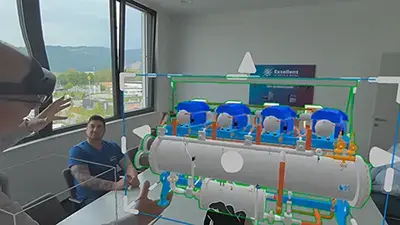
Augmented reality for enterprise is the real world with the data your teams need placed directly into it, on the AR device they already have in hand. The headset is interchangeable. What holds steady is that the experience is ready the instant it is needed, wherever the work is happening.
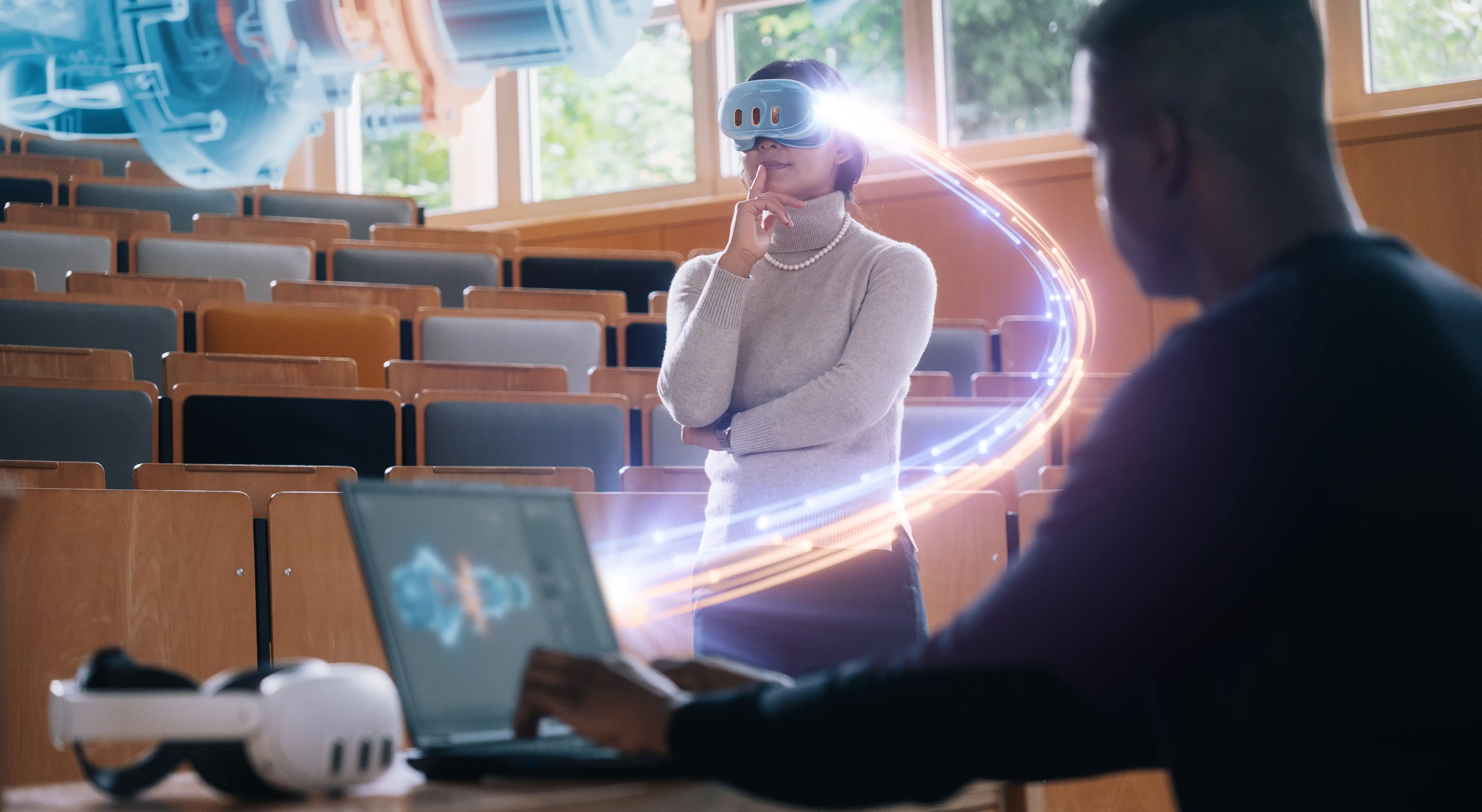
AI generated image
EVENTS
Meet us at I/ITSEC 2026
EVENTS
Meet us at I/ITSEC 2026
EVENTS
Meet us at I/ITSEC 2026
EVENTS
Meet us at I/ITSEC 2026
Trusted by leading industrial organizations
CATEGORY DEFINITION
What Enterprise AR Actually Is, and Why It Is Never About One Device
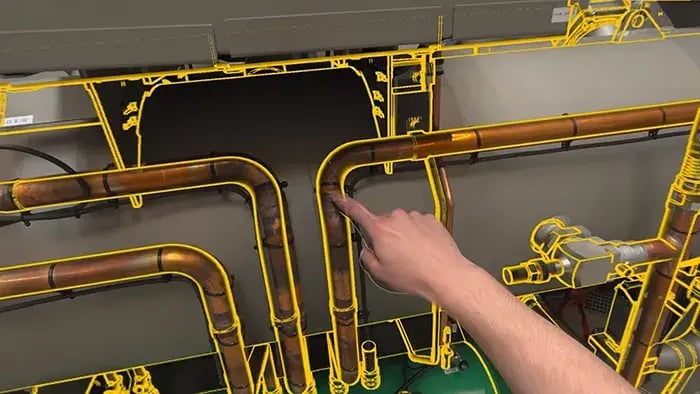
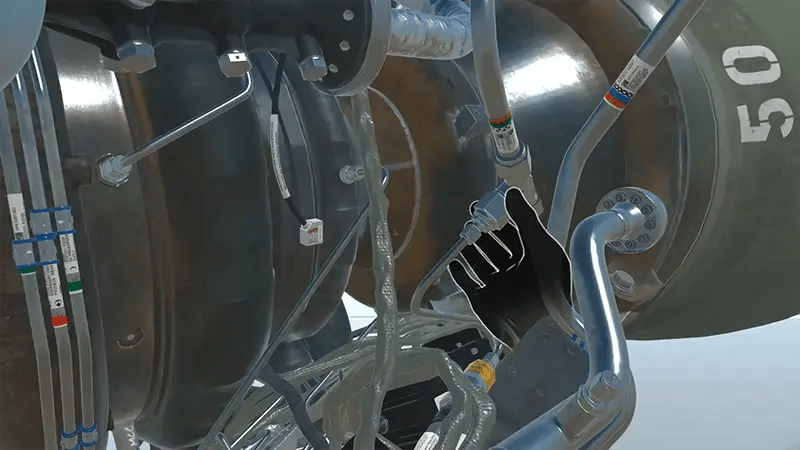
Augmented reality is not a virtual environment that replaces what a worker sees. It is the real world with a digital layer added on top: a repair sequence sitting on the machine itself, a full scale model standing on the floor where it will be built, measurements and notes anchored to the object they describe. The physical environment stays; the data joins it in context.
That definition matters for one practical reason. Because AR lives on top of the real world rather than replacing it, it is not tied to any single class of hardware. Optical see-through glasses, passthrough headsets, and even a tablet held up to a piece of equipment are all valid ways to view an AR layer. The question that decides whether an enterprise AR program works is not which device a team picks this year. It is whether the same application reaches all of those devices reliably, from one place, without being rebuilt every time the lineup changes.
That is the layer Hololight provides.
THE CHALLENGE
Why Enterprise AR Programs Stall Before They Reach the Floor
Few teams still need convincing that AR belongs on the factory floor. Most already know what an overlay on real equipment is worth.
What holds programs back is getting that overlay to show up reliably, for the right person, wherever the work is actually happening.
The experience is rarely ready when the moment arrives.
Even capable AR devices have limited onboard compute. Real engineering data pushes past what a headset can carry on its own, so teams end up preparing lighter versions of their files before a session and hoping the stripped down copy is close enough. The delay defeats the point. AR earns its keep when a technician or engineer can call it up on the spot, not after an afternoon of file prep.
Sensitive data on a shared device becomes a standing risk.
AR hardware in manufacturing, defense, and regulated settings moves between shifts, travels between sites, and goes out for repair. When operational data lives on the device, the exposure travels with it. For organizations with real data handling obligations, that is not an architecture they can scale.
Device-tied deployments do not survive the hardware cycle.
Enterprise AR hardware is moving quickly, toward lighter glasses, new passthrough devices, and purpose-built optical headsets for the factory floor. A program built around one headset generation is already facing the cost of rebuilding for the next. Repeating that work every cycle turns a one-time build into a recurring tax on the program.
THE SOLUTION
The Streaming Layer That Makes Enterprise AR Available Anywhere
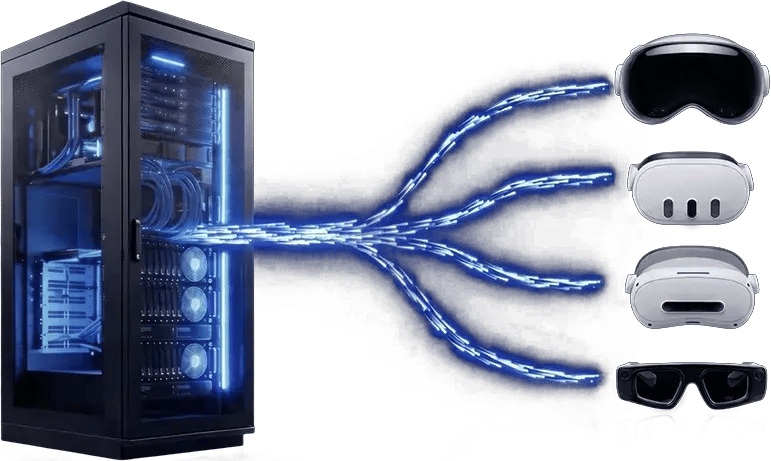
The streaming layer sits between your AR application and any supported headset. The application runs on your own server or workstation. Only pixels travel to the device, which means the headset does the displaying while all of the computing and all of the data stay in your infrastructure.
The result is enterprise AR that any authorized person can open in a moment, from wherever they are, on whatever supported AR device they are holding, without the preparation and lock-in that come from running the application on the headset itself.
HOW IT WORKS
How Enterprise AR Streaming Works
Three steps, no consumer shortcuts, and no third-party infrastructure in the path.
Your application runs on your infrastructure.
Your AR software and every associated 3D file execute on an NVIDIA RTX GPU-equipped server or workstation inside your own environment. Nothing leaves your infrastructure at this stage, and the application runs against your real data at full complexity rather than a reduced stand-in.
Only pixels are transmitted.
The server renders the view and sends the resulting pixels to the AR device, encoded and encrypted over the network. No geometry, no application code, and no operational data ever leaves your servers.
Any AR device displays the result.
The device decodes the pixel stream and shows the rendered image. When the session ends, nothing is left behind on it. The same application, the same result, on any supported AR device, with no device-specific build in between.
Because nothing sensitive ever reaches the headset, your existing security posture is maintained across every endpoint.
Hololight does not add a new layer of security or take anything away from the one you have. It simply keeps your data where it already sits.
BENEFITS
Enterprise AR That Is Ready the Moment It Is Needed, Wherever Your Teams Are
Instantly available.
No per-device configuration, no file preparation, no reduced models. A user opens Hololight Hub, selects an application, and the AR session begins. One action, from any location, on any supported AR device.
Works anywhere.
Factory floor, field site, satellite office, a supplier's facility: enterprise AR should not depend on a controlled lab to behave. Hololight delivers the same experience wherever people work, as long as there is a network connection. For environments where outside connectivity is not permitted, on-premise and fully air-gapped deployments are supported.
Any AR device, with nothing to rebuild.
The same application streams to Apple Vision Pro, Meta Quest, PICO 4 Ultra Enterprise, the HTC Vive family, Snap Spectacles, and more, alongside the devices your teams already run today. Add a new headset to the fleet without touching the application. When new AR hardware arrives, your applications are ready for it without a rebuild.
Your data stays where it belongs.
Only pixels travel to the device. Your models, engineering files, and operational data remain on your servers through the entire session. Hololight maintains the data security posture you already have rather than creating a new one to manage.
Built for organizational scale.
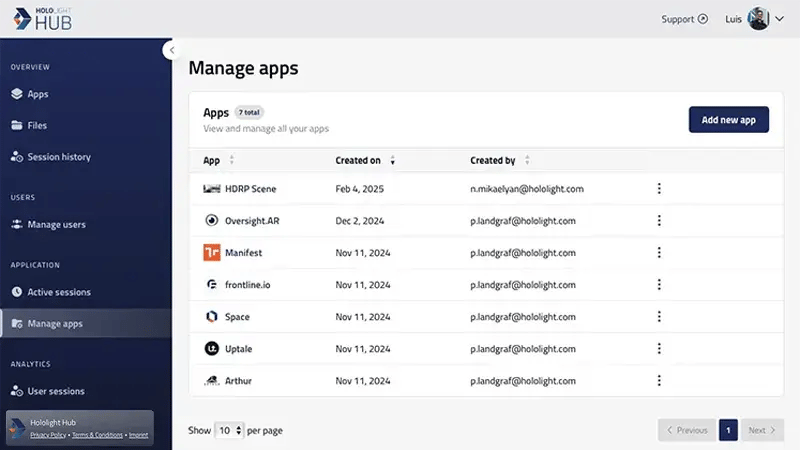
Through Hololight Hub, IT teams deploy applications, manage users, and monitor active sessions across the whole fleet from one interface. No setup at each device, no manual configuration at every endpoint, however many users and headsets the program grows to.
USE CASES
Where Enterprises Are Running AR Today
AR is where a large share of Hololight deployments run today: real work with a digital layer added, delivered to whatever device suits the task.
AR-guided maintenance and inspection
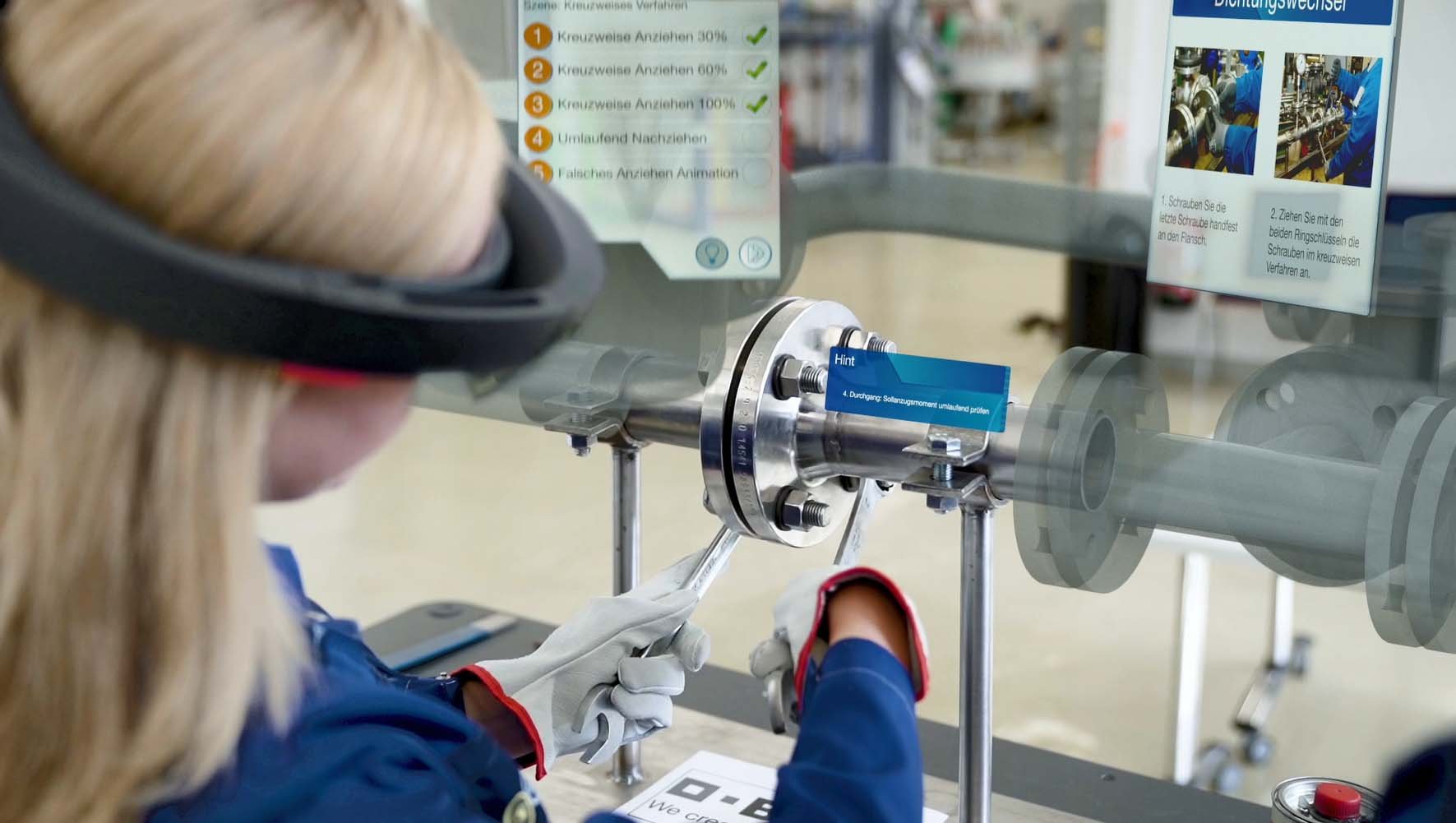
Field technicians see procedures, schematics, and step-by-step guidance anchored to the equipment in front of them. Diagnosis is faster, errors drop, and there is no shuffling between the task and a separate manual or screen.
AR design review and validation
Engineering and design teams review full-scale models in the actual space, next to or overlayed the physical product or inside the facility being planned, and bring in collaborators from other sites for the same session. Decisions get made with real spatial context, earlier, and with less dependence on physical prototypes. Engie Refrigeration, BMW and Genesis Design Studios have both built Hololight into their standard design process.
AR-based training and operational guidance
Workers learn procedures with the relevant data overlaid in the real workspace, so the knowledge a job requires is something they can see in place rather than memorize in advance.
Factory planning and layout visualization
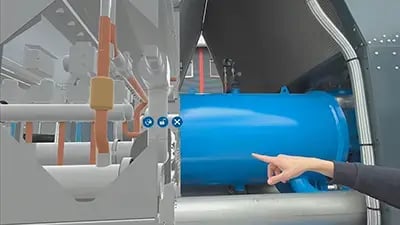
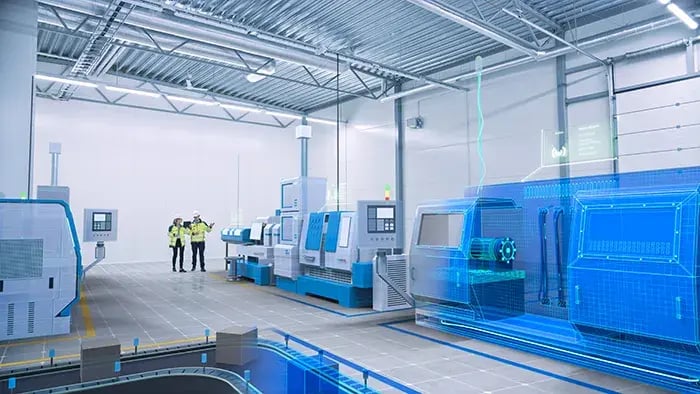
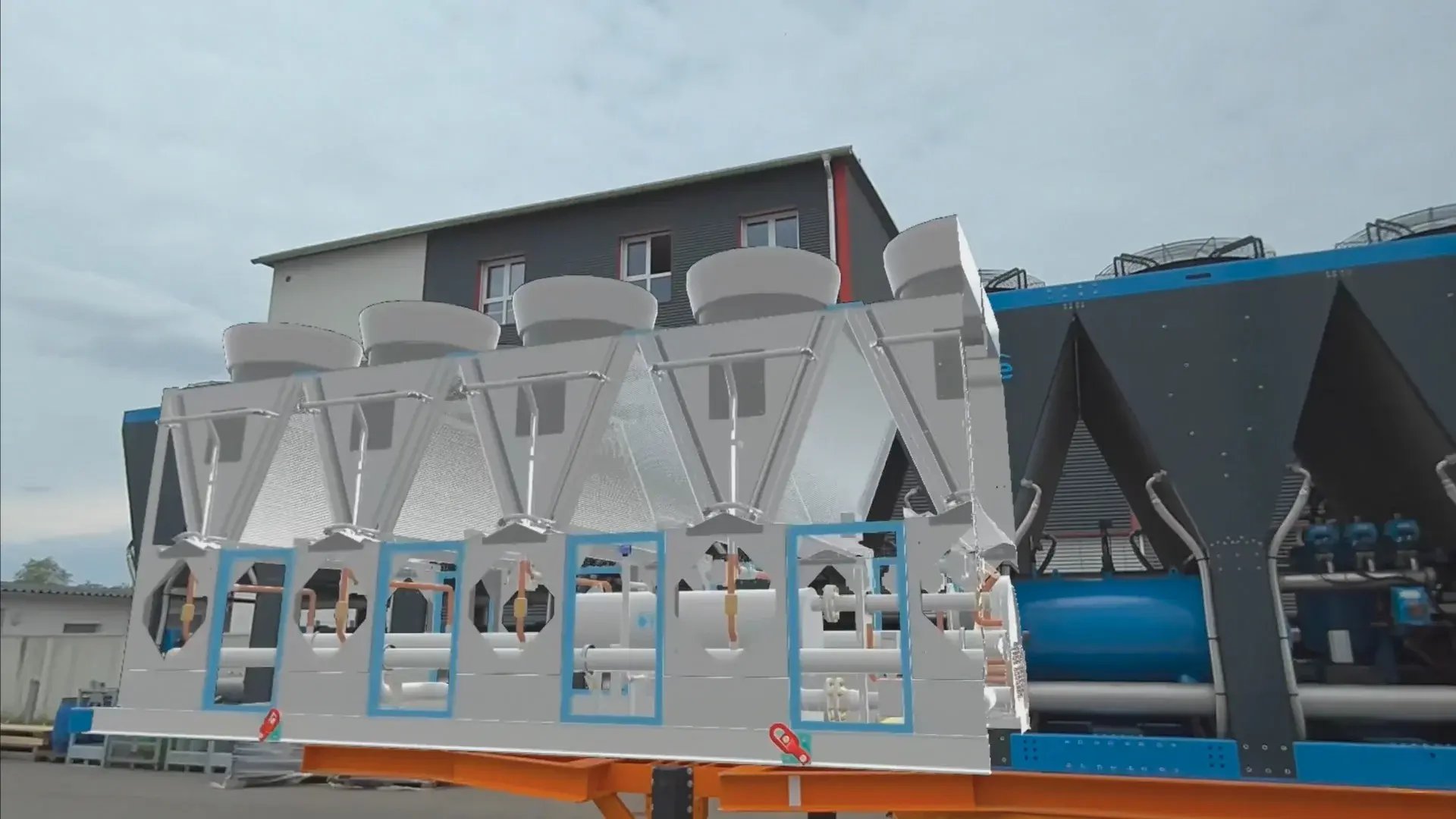
Planners place new machinery and line changes at full scale inside the real building before anything is installed, catch spatial conflicts early, and commission with a clear picture of the space. Bilfinger applies this to industrial planning across active sites, and ENGIE Refrigeration reviews full-scale machine models in AR ahead of handover to production.
PROOF
How Industrial Organizations Are Running Enterprise AR Right Now
Using AR Across Industrial Processes
Over a long-term partnership, ENGIE Refrigeration has put AR to work across its engineering workflows and presents full-scale industrial chillers anywhere with AR. The team points to close, responsive collaboration as the reason the relationship holds.
"The cooperation with Hololight is always constructive, friendly, and goal-oriented. My ideas are well received, and the team considers and implements them according to our individual requirements."
– Jörn Stiegelmeier, Head of Technology & Development, ENGIE Refrigeration
Redefining Industrial Planning with AR
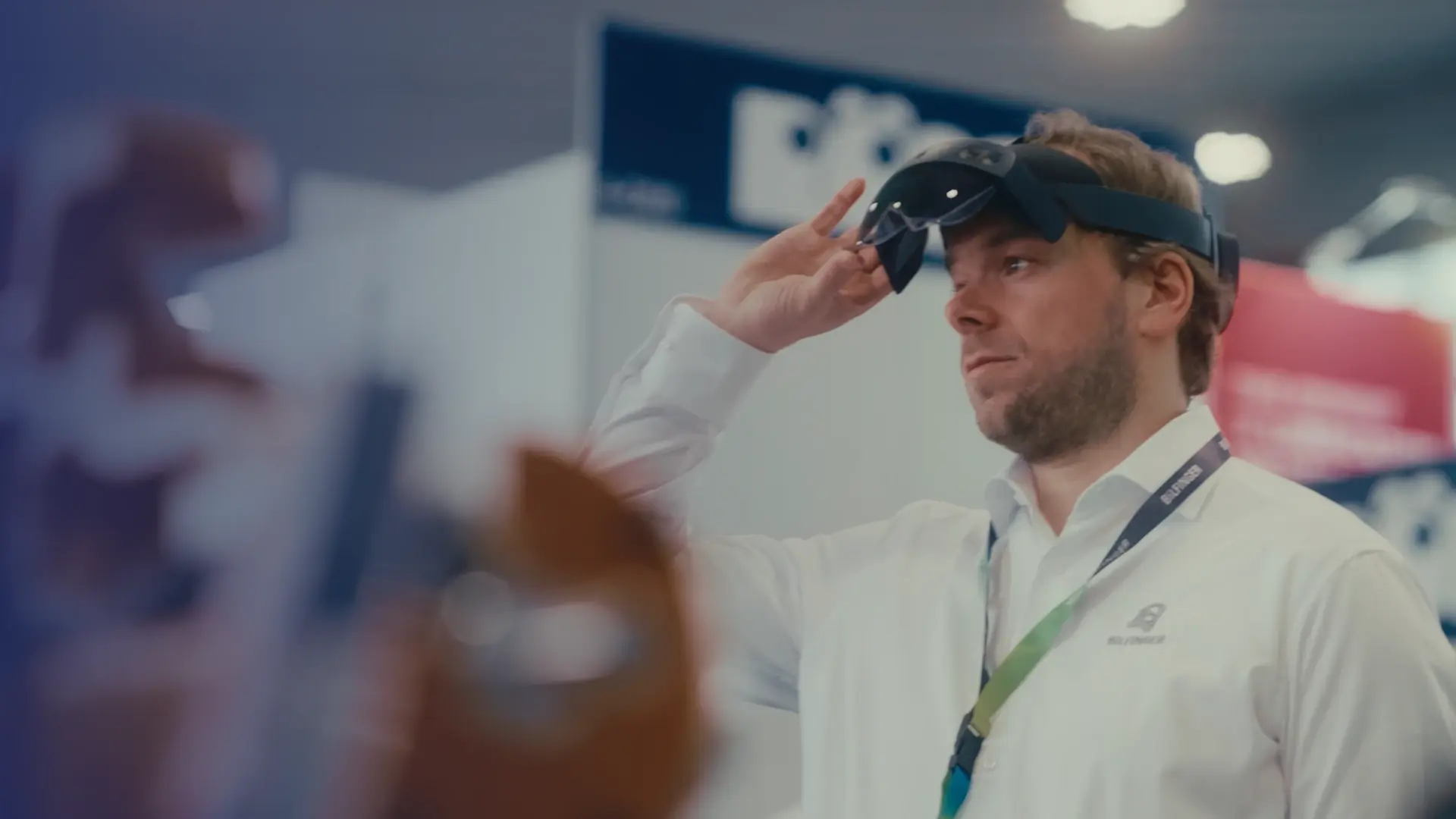
Bilfinger's engineering teams plan directly against spatial and operational data on active industrial sites, making planning faster and more precise.
"Our planning becomes easier, faster, and more precise. With Hololight, we can visualize elements that often remain hidden."
– Tobias Bauchrowitz, Head of Engineering, Bilfinger
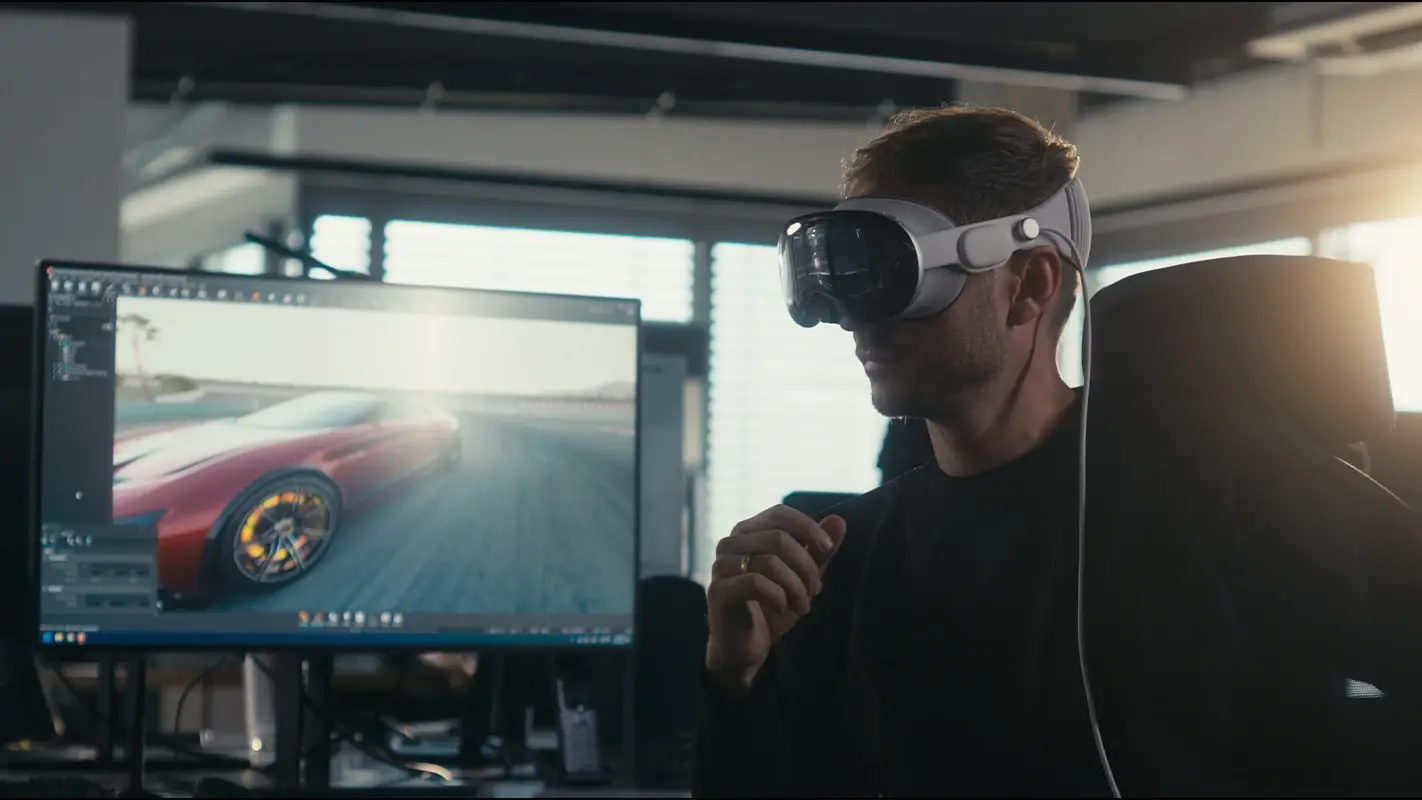
One-Click AR Design Review on Apple
Vision Pro
Genesis streams Autodesk VRED design sessions to Apple Vision Pro instantly and wirelessly, and has made it a fixed step in how the team designs.
"Hololight Stream is more than just a tool. It's become a standard in our design process."
– Alexander Makush, Project Lead, Genesis Design Studios
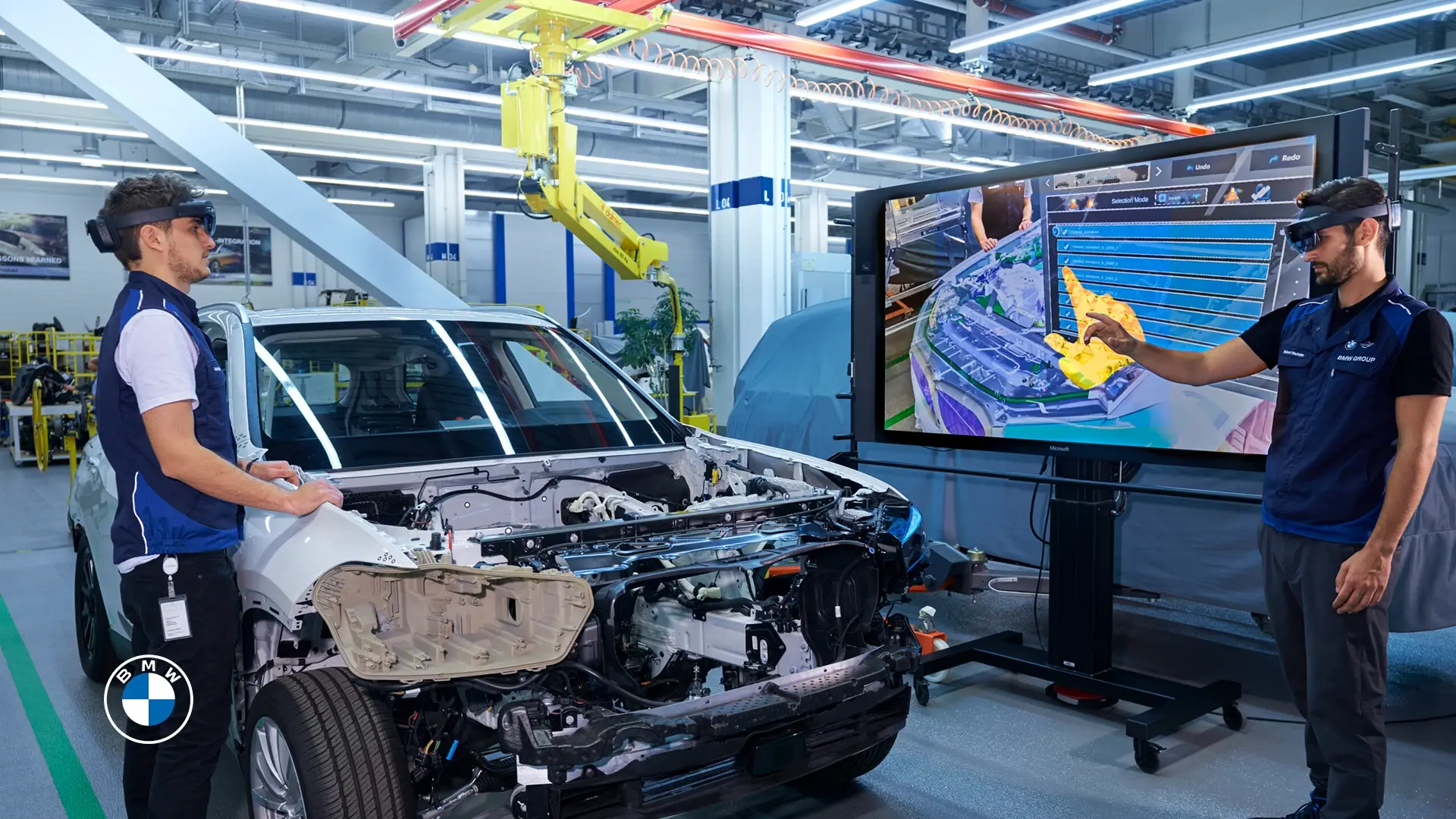
Faster Concept Evaluation with AR in Prototyping
BMW's pilot plant uses AR with live CAD data to check component fit for series production far earlier, cutting the number of physical test setups the team needs.
"The AR goggles and CAD data allow us to find out much faster, whether the production worker will be able to fit the component properly later on, in series production. That way, we need far fewer test setups."
– Michael Schneider, Head of Complete Vehicle, BMW Pilot Plant Munich
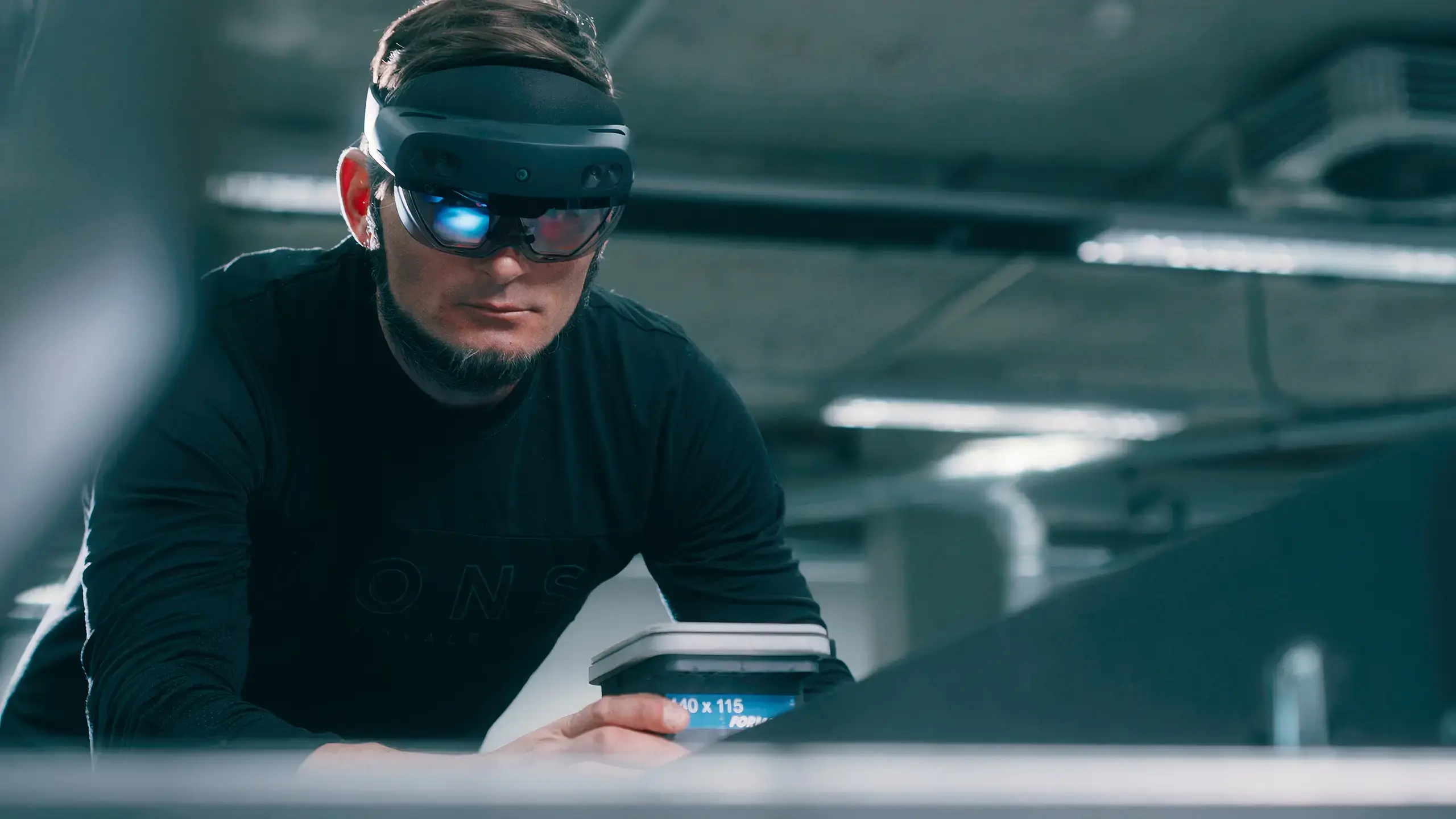
AR-Guided CNC Machine Setup on the Shop Floor
Felder Group's F4 Vision app runs with Hololight's XR pixel streaming technology, overlaying cutting paths on the raw material so workers can position non-squared workpieces accurately.
"This is only possible with the streaming technology by Hololight. If this wouldn't work perfectly, nobody would use it."
– Armin Brucic, Head of Software Development & Application Engineering, Felder Group
Saved per prototype
(Genesis Design Studios)
Physical prototypes
(Genesis Design Studios)
Saved per development cycle
(BMW)
“Hololight Stream brings that incredible quality into XR – easily, instantly, wirelessly and on all major head-mounted displays.
This is one of the best ways I have experienced VRED immersively and interactively.”
– Danny Tierney, Senior Automotive Design Solution Specialist (VRED), Autodesk
DEVICE COMPATIBILITY
Stream Enterprise AR to Every Major AR Device, Including Smart Glasses
Enterprise AR does not live on one device, and neither does Hololight. The same application streams from the same infrastructure to passthrough headsets, optical AR devices, enterprise AR glasses, lightweight smart glasses, and even a tablet held up to the work, with nothing rebuilt in between.
Apple Vision Pro
High-fidelity passthrough AR and spatial computing. Used for design review, engineering visualization, and high-stakes stakeholder presentations. Supported.
Meta Quest family
Passthrough mixed reality at fleet-deployable price points, for training, planning, and collaborative review across teams and sites. Supported.
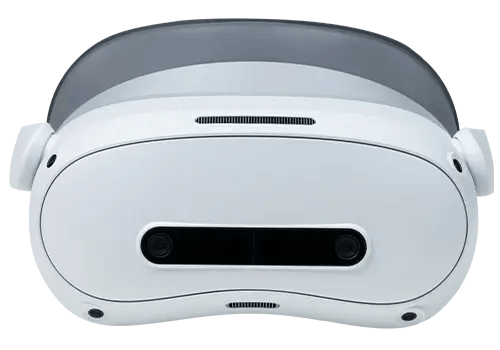
PICO 4 Ultra Enterprise
Enterprise-native passthrough XR, with high-resolution passthrough and depth sensing for shared-device deployments. Supported.
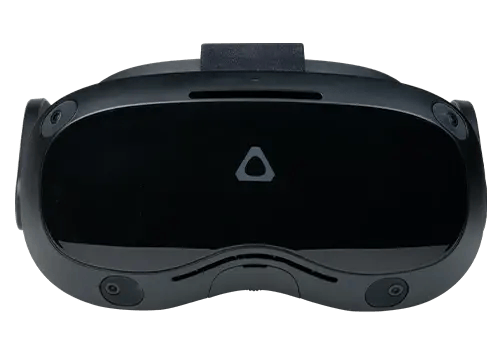
HTC Vive family
Enterprise-grade headsets with deployment and management support. Supported.
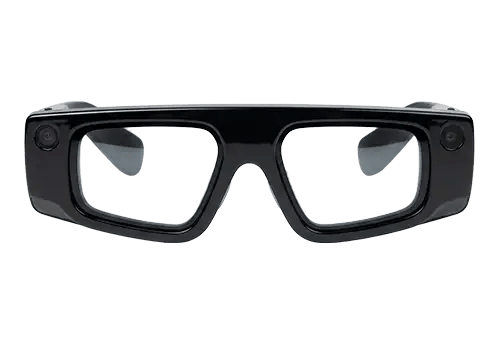
Snap Spectacles
Lightweight AR glasses with hand tracking and audio, and a natural fit for streaming enterprise AR to smart glasses, with all processing handled server-side and all data kept in your infrastructure. Supported.
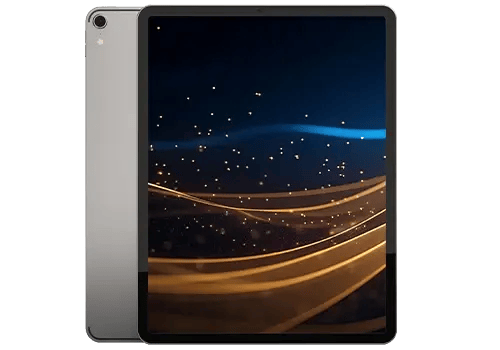
Apple iPad and iOS
Handheld AR, for viewing streamed 3D content in context without wearing a headset. A useful entry point where glasses are not practical. Supported.
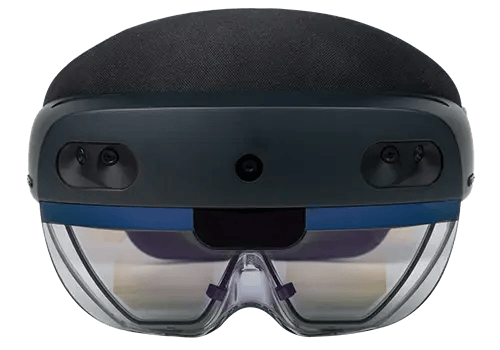
Microsoft HoloLens 2
Although discontinued by Microsoft, it remains in active use across many organizations, including Hololight customers running maintenance, inspection, and planning. Maintenance mode.
Devices are reached through native OpenXR compatibility, the open standard the XR industry is converging on across hardware platforms. As the AR glasses market continues to move, with major players pushing lighter and more capable devices toward the enterprise, the streaming layer adapts to the new hardware while the application stays as it is. Hololight maintains active relationships with AR hardware makers across the major device categories, so the fleet can grow without the program starting over.
PROPRIETARY STACK
One Platform for the Full Enterprise AR Stack
Hololight is a single integrated infrastructure: a streaming layer, an enterprise management platform, and a ready-to-use visualization application that runs inside it.
One complete solution rather than three products to assemble.
Hololight Stream:
the AR streaming layer
Hololight's proprietary pixel streaming technology, built and owned entirely in-house. Any OpenXR-compatible AR application streams to any supported device, with no per-device build and no file preparation, including applications built on Unity and Unreal Engine, and major CAD visualization tools.
Hololight Hub:
the enterprise AR platform
Hololight Hub is the central platform to deploy, manage, and monitor AR applications and devices across the organization, from access and application libraries to device inventories and live sessions. It deploys on-premise, in the cloud, or in air-gapped environments for defense and regulated industries.
Hololight Space:
ready-to-use AR visualization
A production-ready application for reviewing industrial 3D CAD at full scale, with multi-user sessions and a built-in toolset for inspecting and marking up models. No custom development, available as a standard application inside Hololight Hub.
FAQ
Common Questions About Enterprise AR Streaming
-
Does Hololight work with our existing AR applications?
If the application is OpenXR-compatible, it streams to any supported AR device without modification, with no parallel version to maintain per headset. Unity, Unreal Engine, Autodesk VRED, NVIDIA Omniverse, KeyShot, and other major engines and tools are supported.
-
Where does our data go?
It stays in your infrastructure. Hololight transmits only pixels, the rendered view of the application. Your 3D models, engineering files, and operational data remain on your servers through the entire session, and this architecture maintains the security posture you already have rather than introducing a new perimeter to manage.
-
Which AR devices are supported?
Apple Vision Pro, the Meta Quest family, PICO 4 Ultra Enterprise, the HTC Vive family, Snap Spectacles, Apple iPad and iOS, and Microsoft HoloLens 2, among others. As new hardware arrives, it is added to the supported list without changes to applications already in use.
-
What do we need on our end?
An NVIDIA RTX GPU-equipped server or workstation on your network. Because rendering happens server-side, the investment sits in server capacity rather than per-device hardware, and a single server serves multiple devices and multiple applications across the whole program. On-premise and air-gapped deployment are supported, and cloud is available where preferred.
-
How is this different from consumer AR tools?
Consumer tools are made for a single person on a personal device. They carry no deployment management, no multi-device support, and no security posture suited to industrial or defense work. Hololight is purpose-built enterprise infrastructure, with centralized management, commercial support, and full on-premise capability.
-
Is this the same technology as NVIDIA CloudXR?
No. Hololight's pixel streaming is developed and owned entirely by Hololight and is not built on NVIDIA CloudXR or any third-party streaming engine, and it makes full use of your NVIDIA RTX hardware. That independence is what enables full on-premise and air-gapped deployment, support across every major AR device, and an enterprise management platform that runs on its own footing.
CONTACT US
Start Your Enterprise AR Deployment
For the industries Hololight serves, enterprise AR is not a future project. It is running today, at scale, inside organizations that look like yours.
The infrastructure that makes it work securely, on any AR device, and across a distributed workforce is available now.