
 Laura Haase
What's New in Hololight Stream 2026.1.0.0
 Phillipp Landgraf: Oct 8, 2026
Hololight Stream version 2026.1.0.0 is available. It is a broad release, with work going into stability, connection quality and the everyday...
If your organization is evaluating or deploying XR technology, you have almost certainly encountered the term OpenXR. OpenXR is a royalty-free, open API standard that defines how XR applications communicate with XR hardware. Understanding it gives enterprise buyers a sharper framework for evaluating platforms, assessing vendor claims, and making infrastructure decisions that hold up as the market evolves.
By the end of this article, you will understand what OpenXR is and where it sits in the XR technology stack, how its governance model affects your organization's long-term vendor posture, what OpenXR conformance means when assessing XR vendors, and how the standard underpins enterprise XR streaming infrastructure.
In this guide:
What the fragmentation problem was that OpenXR was built to solve
| Governing body | The Khronos Group (multi-industry, open-membership consortium) |
| Standard type | Royalty-free open API standard |
| License | Apache 2.0 |
| Current version | OpenXR 1.1 (released April 2024) |
| Initial release | OpenXR 1.0, July 2019 (SIGGRAPH) |
| Scope | AR, VR, and Mixed Reality (collectively: XR) |
| Key headset adopters | Meta, Microsoft, HTC, PICO, Varjo, Valve, Apple |
| Engine support | Unreal Engine (4.24+), Unity (2020+), Godot (4.0+), NVIDIA Omniverse, Autodesk VRED, Blender |
| Conformance program | Open-source Conformance Test Suite (CTS), published on GitHub |
| Replaces (for new development) | Meta VrApi, Windows Mixed Reality APIs, Valve OpenVR |
| What it is not | A game engine, a headset, a runtime implementation, or a consumer product |
| Who should care | IT architects, XR program managers, enterprise procurement teams, XR developers |
| Relationship to XR streaming | OpenXR is the standard API that XR streaming platforms implement on the server side, enabling any OpenXR-compatible application to be deployed through a streaming architecture |
| Hololight's position | Khronos Group member; XR Streaming technology based on a published Khronos Specification; currently in Conformance Process |
Before the OpenXR standard existed, every major XR platform maintained its own proprietary development interface. Targeting Microsoft’s HoloLens required the Windows Mixed Reality toolkit. Targeting Meta’s Quest devices required VrApi, a Meta-proprietary interface that Meta has since deprecated, ending active support on August 31, 2022, and directing all new development to OpenXR instead.¹ Targeting Valve’s SteamVR ecosystem required the OpenVR SDK, governed solely by Valve and tied to the SteamVR runtime. These were not minor variations on a shared approach; they were architecturally different APIs, and an application written for one could not run on the others without significant redevelopment.
For enterprise organizations deploying XR at scale, this was a strategic liability. Mixed headset fleets meant maintaining parallel software investments for each vendor’s platform. Any hardware refresh cycle, or any decision to adopt a new device category, risked forcing a redevelopment project. An organization’s XR software portfolio was not portable; it was bound to whichever vendor’s SDK it had been written against.
The Khronos Group, the consortium responsible for established open graphics and media standards including OpenGL and Vulkan, announced the OpenXR Working Group at GDC on February 27, 2017, bringing together the major players in the XR industry to define a single, vendor-neutral API that any XR application could use and any XR hardware vendor could implement.² OpenXR 1.0 was released publicly at SIGGRAPH in July 2019.²
Before OpenXR vs. with OpenXR:
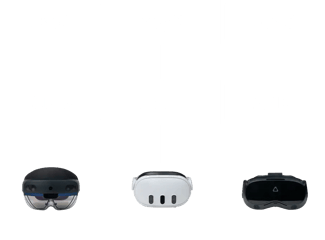
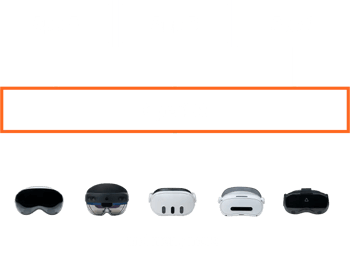
OpenXR is a royalty-free, open API standard developed and maintained by the Khronos Group.³ It defines a common set of interfaces through which an XR application communicates with XR hardware, without the application needing to know anything specific about the hardware it is running on. In practical terms, OpenXR is a precisely specified contract: the application issues standardized requests, and any runtime that correctly implements OpenXR knows exactly how to fulfill them, regardless of which headset is connected.
For readers who are not from a development background, it is worth being explicit about what OpenXR is not. OpenXR is not a game engine: it does not render graphics or run application logic. It is not a headset: it produces no output on its own. It is not a finished piece of software: it is a specification, a document that defines the behavior required of any compliant implementation. The component that actually implements OpenXR and communicates with the hardware is the runtime, covered in the architecture section below.
| What OpenXR Is | What OpenXR Is Not |
|---|---|
|
A royalty-free, open API standard A specification maintained by an industry consortium A common language between XR applications and XR hardware A runtime interface implemented by headset vendors and XR platforms The basis for cross-platform XR development |
A game engine A headset or hardware product A finished piece of software you install An SDK you build with A guarantee of identical features across all devices |
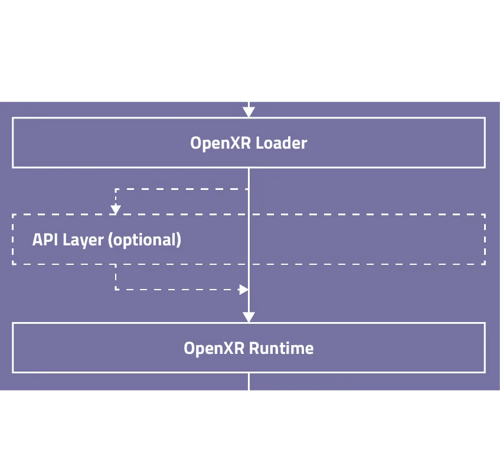
OpenXR is designed as a layered system with three primary components sitting between the application and the physical hardware.
The loader is the first component the application interacts with. Its job is to discover which OpenXR runtime is active on the system and route the application’s calls to it, handling this automatically so the application requires no hardware-specific knowledge.
Between the loader and the runtime, API layers may optionally be inserted. These are middleware components used during development for validation, debugging, or performance analysis; in production deployments they are typically absent.
The runtime is the component that translates the application's standardized OpenXR calls into hardware-specific instructions for the connected device. Headset vendors and XR platform providers each ship their own runtime; the application only needs to know OpenXR. This separation is the core architectural value of the standard: the application speaks one language, and the runtime handles everything hardware-specific below it.
The core OpenXR specification covers the capabilities every XR system must support: session management, frame submission, input handling, and spatial tracking. Hardware capabilities beyond this baseline, such as eye tracking or mixed reality passthrough on specific headsets, are exposed through optional vendor extensions that applications query for availability before use, ensuring they function correctly on hardware that does not support a given feature.⁴
The Khronos Group is a non-profit, open-membership industry consortium that manages the development of open standards for graphics, media, and spatial computing.³ Its governance model is multi-stakeholder: changes to any Khronos standard require working group consensus, and no single member organization holds unilateral authority over the API. The organizations currently participating in the OpenXR Working Group include Meta, Microsoft, Google, NVIDIA, Qualcomm, Valve, HTC, PICO, and Varjo, among more than thirty others.
For enterprise buyers, this governance structure carries practical consequences. When an application is built against a proprietary SDK controlled by a single vendor, the long-term stability of that application is tied to that vendor’s business decisions. Meta’s deprecation of VrApi in 2022, withdrawing it from active support and directing all developers to OpenXR, is a documented instance of exactly this risk.¹ Organizations that had already built against OpenXR were unaffected.
A standard governed through documented, multi-stakeholder consensus is structurally more durable for long-horizon planning. No participant in the OpenXR Working Group can unilaterally break backwards compatibility or withdraw the API, and for infrastructure decisions that span multiple hardware generations, that guarantee is a material consideration for enterprise buyers.
Hololight joined the Khronos Group and the OpenXR Working Group in March 2025, contributing specifically to advancing XR streaming capabilities within the standard.⁵ That membership is both a technical commitment and a signal for enterprise buyers evaluating long-term XR streaming infrastructure.
OpenXR is not a technical checkbox. It is the architecture that determines whether an enterprise XR deployment can actually scale across devices, across teams, and across hardware generations. Our decision to join the Khronos Working Group was a strategic one: we are building infrastructure, and infrastructure requires standards with genuine industry consensus behind them.
- Florian Haspinger, Co-founder and Managing Director, Hololight
| Factor | OpenXR / Khronos Consortium | Single-Vendor Proprietary API |
|---|---|---|
| Who controls the API | Multi-stakeholder working group, consensus-based | Single company, internal decision |
| Change process | Documented review; backwards compatibility protected | Vendor's discretion |
| Vendor independence | Yes: any conformant runtime qualifies | Tied to that vendor's product lifecycle |
| Roadmap influence | Available to Khronos members | Not possible for external organizations |
| Risk if vendor changes direction | Standard continues independently | API may be deprecated without notice |
| Track record | OpenXR 1.0 (2019), OpenXR 1.1 (2024); active development ongoing | Varies by vendor |
| Enterprise longevity | High: broad industry investment and governance | Dependent on single vendor's strategic priorities |
As the OpenXR ecosystem matures, formal conformance has become an increasingly relevant signal for enterprise procurement decisions. OpenXR conformance is not a prerequisite for building products that work with OpenXR; it is a formal verification step that confirms a runtime correctly implements the specification across a comprehensive and independently administered set of functional tests.
That verification process is run by the Khronos Group through the open-source OpenXR Conformance Test Suite (CTS), a battery of tests published on GitHub that covers the full range of behaviors an OpenXR runtime must correctly handle.⁶ A product that passes the CTS and completes the Adopter process earns the OpenXR trademark and receives patent protection under the Khronos IP Framework.⁶ The CTS is continuously updated, so conformance always reflects quality against the current specification.
For enterprise buyers, understanding a vendor’s conformance status and trajectory gives a clearer picture of implementation quality than product descriptions alone. Vendors across the industry are at different stages of this process, and knowing where a given product sits, and what the roadmap toward full conformance looks like, is a useful input to procurement decisions.
Hololight’s XR Streaming technology is designed to be conformant with OpenXR. The technology is based on a published Khronos Specification and is expected to pass the Khronos Conformance Process.
| Question | Why It Matters |
|---|---|
| What is your current status under the Khronos Adopter program? | Helps clarify where the vendor sits on the conformance journey |
| Which OpenXR version does your implementation target? | Ensures the implementation is current, not based on an outdated spec version |
| Have you passed, or are you actively working through, the Khronos Conformance Test Suite? | The CTS is the verification mechanism; understanding progress here is the meaningful signal |
| Which OpenXR extensions does your runtime support beyond the core spec? | Core conformance does not require all extensions; gap analysis matters for your specific use cases |
| Is your conformance status or roadmap publicly documented? | Transparency about the conformance journey signals commitment to the standard |
| Are you a member of the OpenXR Working Group? | Indicates active participation in the standard's evolution, not just adoption of the current version |
In most XR setups, the device that does the rendering also needs access to the underlying data, which means sensitive files sit on hardware that can be lost, stolen, or connected to an insecure network. XR streaming changes this.
XR streaming moves the computation to a server in a controlled environment. The application executes entirely on that server, whether on-premise, in a private cloud, or in an air-gapped environment, and only the rendered output as encoded pixels is transmitted to the headset over the network. The headset decodes and displays those pixels; it never receives, stores, or processes the underlying application or its data. OpenXR functions as the standard interface layer on the server side, meaning any OpenXR-compatible application can run through a conformant streaming implementation without modification.
Hololight’s XR Streaming technology follows this model. By streaming only pixels from server to headset, never the underlying data, Hololight enables organizations in defense, automotive, and manufacturing to deploy XR at enterprise scale without compromising data sovereignty. The application and its data remain within the customer’s own infrastructure across on-premise workstations, private server deployments, and air-gapped environments, while the headset functions as a display terminal rather than a data endpoint. The technology is designed to be conformant with OpenXR: it is based on a published Khronos Specification and is expected to pass the Khronos Conformance Process.
BMW Group has applied this model at its Munich pilot plant, using XR streaming to validate vehicle components at full 1:1 scale in AR. All rendering runs on BMW's own servers; only encrypted pixels reach the headset, and sensitive design data never leaves BMW's infrastructure. The deployment saved up to 12 months per development cycle by replacing time-consuming physical prototype builds with digital holographic validation.
For a direct comparison between OpenXR and the standard it has largely superseded for new enterprise development, see our OpenXR vs. OpenVR: The Enterprise Developer’s Guide (2026).
| Factor | Standalone XR | XR Streaming (Hololight) |
|---|---|---|
| Where rendering happens | On the headset itself | On a server in a controlled environment |
| What the headset does | Runs the full application on-device | Receives and displays a pixel stream |
| Where the application data lives | On the headset | On the server; never reaches the headset |
| Risk if device is lost or stolen | Application data on device | No application data on device |
| Infrastructure | Headset must have sufficient onboard compute | Server in data center, cloud, or air-gapped network |
| Network requirement | Not required | Required: connection to the server |
| Data sovereignty | Data tied to a physical device in the field | Data stays within customer-controlled infrastructure |
 Phillipp Landgraf: Oct 8, 2026
Hololight Stream version 2026.1.0.0 is available. It is a broad release, with work going into stability, connection quality and the everyday...
 Phillipp Landgraf: Oct 1, 2026
Remote rendering and pixel streaming are both used to describe enterprise XR streaming infrastructure, including by vendors and in technical...
 Sandro Sailer: Sep 24, 2026
For most enterprise teams, XR device management means one thing: a way to control their headsets. Mobile device management (MDM) tools like ArborXR,...