9 min read

HMS SiNGRAY G2 vs. Microsoft HoloLens 2

HMS SiNGRAY G2 vs. Microsoft HoloLens 2
10:31

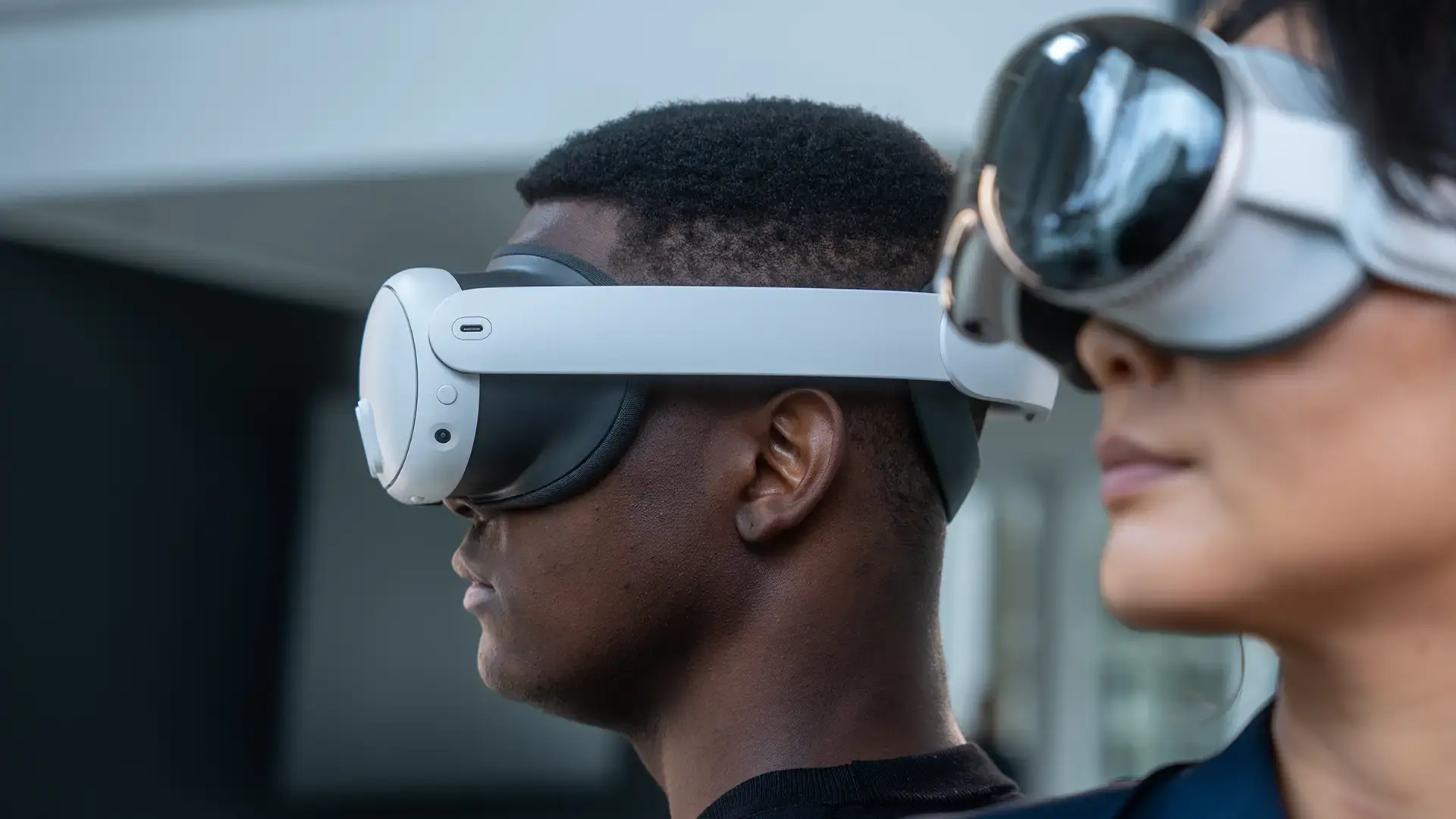
In 2026, enterprise teams replacing aging AR hardware face a question the market has not fully answered: is the HMS SiNGRAY G2 a credible successor to the Microsoft HoloLens 2? We compared both headsets across seven criteria relevant to enterprise frontline deployments, analyzing hardware specifications, software ecosystems, field readiness, and real-world deployment fit using manufacturer documentation, third-party hardware reviews, and published benchmark comparisons.

One finding worth stating upfront: for organizations running complex industrial applications, the headset hardware is only part of the equation. Platforms like Hololight offload rendering entirely to your own servers and stream only encrypted pixels to the headset, which means onboard processing power becomes a secondary concern. We address the implications of that in the software section below.

The factors we weighted in our evaluation:

  • ■  Display technology and optical clarity (20%)
  • ■  Processing power and tracking performance (20%)
  • ■  Field durability and battery readiness (15%)
  • ■  Software ecosystem and enterprise integration (20%)
  • ■  Ergonomics and fit for extended shifts (10%)
  • ■  Availability and support continuity (10%)
  • ■  Price-to-value ratio (5%)

Based on these criteria, the SiNGRAY G2 scores higher on hardware performance and field readiness, while the HoloLens 2 retains a meaningful edge in enterprise software depth and eye-tracking fidelity. The table below shows exactly where each headset wins, and the sections that follow explain what those differences mean in practice.

HMS SiNGRAY G2 vs. Microsoft HoloLens 2: Full Spec Comparison

Specification HMS SiNGRAY G2 Microsoft HoloLens 2
Optics Birdbath optical system Diffractive waveguide
Display panel 1920×1200 Sony Micro-OLED (per eye) 1440×936 laser beam scanning
Refresh rate 90 Hz 60 Hz
Field of view (diagonal) 51° 52°
FOV (H × V) 45° × 28° 43° × 29°
Pixels per degree (PPD) 43 PPD 47 PPD
Contrast ratio 100,000:1 Not published
Light-blocking lens Electro-chromic (adjustable) Fixed
CPU Qualcomm QCS8550 (Snapdragon 8 Gen 2, 4 nm) Qualcomm Snapdragon 850 (10 nm)
VPU / HPU Intel Movidius Myriad X Microsoft HPU 2.0
RAM / Storage 12 GB / 256 GB + MicroSD up to 2 TB 4 GB / 64 GB
Tracking 6DoF + 3DoF switchable, 100 Hz SLAM 6DoF world-scale
Eye tracking No Yes (real-time IR)
Hand tracking Gesture recognition Fully articulated two-hand model
RGB camera 8 MP @ 30 fps 8 MP, 1080p30 video
Depth sensor ToF, 0.2–4 m range Time-of-Flight (Azure Kinect)
Battery 2,500 mAh, hot-swappable (3-min grace) Fixed, 2–3 hours active use
IP rating IP65 Not rated (Industrial Ed.: ISO Class 5)
OS Android fork with OpenXR runtime Windows Holographic (Win 11 supported)
Connectivity Wi-Fi 6, Bluetooth 5.2, GPS, USB-C Wi-Fi 5, Bluetooth 5.0, USB-C
Pre-installed software frontline.io industrial AR platform Dynamics 365 Remote Assist + Guides
SDK support Snapdragon Spaces, Unity Native SDK, OpenXR Universal Windows Platform, Unreal, Unity
Price Contact for enterprise pricing $3,500 hardware; $125/user/month bundle
Status Mass production 2026 (enterprise only) Discontinued; units still available

Display Technology: Birdbath Optics vs. Diffractive Waveguide

The SiNGRAY G2 uses birdbath optics, which magnify Sony Micro-OLED panels via a concave mirror. This approach delivers a 1920×1200 image at 90 Hz with a 100,000:1 contrast ratio. The tradeoff is that birdbath systems require the lens to be partially darkened, which reduces pass-through transparency compared to waveguide designs. HMS addresses this with an electro-chromic lens that adjusts darkness for different lighting conditions, from office environments to brightly lit factory floors.

The HoloLens 2 uses diffractive waveguides with laser beam scanning, which allows a nearly transparent view of the real world at all times. This produces the holographic effect the device is known for: digital content appears to sit directly in the physical environment. The downside is a lower refresh rate (60 Hz) and a resolution capped at 1440×936 per eye, which limits text legibility at smaller font sizes during close-up tasks.

Display comparison

Display metric HMS SiNGRAY G2 Microsoft HoloLens 2
Resolution per eye 1920×1200 1440×936
Refresh rate 90 Hz 60 Hz
Contrast ratio 100,000:1 Not published
Real-world transparency Reduced (electro-chromic lens adjustable) High (waveguide pass-through)
Brightness 1,000 cd/m² peak Not published

For tasks requiring sharp, high-contrast overlays such as 3D assembly diagrams or tolerance readouts, the SiNGRAY G2's Micro-OLED display outperforms the HoloLens 2 in raw image quality. For use cases where full environmental awareness is the top priority, the HoloLens 2's waveguide transparency remains an advantage.

Processing Power and Tracking Performance

The SiNGRAY G2 ships with Qualcomm's QCS8550 (the Snapdragon 8 Gen 2), a 4 nm chip with 12 GB RAM. The HoloLens 2 uses the Snapdragon 850 built on 10 nm, paired with 4 GB of RAM. According to UploadVR, the SiNGRAY G2's chipset is "3–4x more powerful" than the HoloLens 2's processor. That gap translates to faster rendering of complex 3D models, lower latency in remote-support sessions, and more headroom for AI inference at the edge.

Both devices use a secondary processing unit to offload spatial tracking from the main CPU. The SiNGRAY G2 uses Intel's Movidius Myriad X VPU with a proprietary SLAM engine running at 100 Hz. The HoloLens 2 uses Microsoft's HPU 2.0, which supports eye tracking, hand tracking, and spatial audio acceleration. The SiNGRAY G2 does not include eye tracking, which reduces power draw and simplifies the sensor stack, but removes a meaningful input modality.

Processing comparison

Processing metric HMS SiNGRAY G2 Microsoft HoloLens 2
Main chip process node 4 nm 10 nm
RAM 12 GB 4 GB
Secondary processor Intel Movidius Myriad X Microsoft HPU 2.0
SLAM tracking rate 100 Hz Not published
Eye tracking No Yes
Tracking accuracy ±0.5° @ 3 m Not published

Teams running complex digital twin workflows or real-time rendering of large equipment assemblies will see a measurable performance benefit with the SiNGRAY G2. Teams that rely on eye-tracking inputs for hands-free menu navigation will find the HoloLens 2 better suited to those workflows.

Battery Life and Field Durability

Battery management is a defining factor for shift-based industrial deployments, and this is where the SiNGRAY G2 introduces a meaningful design advantage. The headset uses a hot-swappable 2,500 mAh, 7.6V battery with a secondary internal buffer that provides a three-minute grace period during swaps. Workers can replace the battery without powering down, which enables continuous operation across full shifts without downtime.

The HoloLens 2 has a fixed, non-swappable battery rated at 2–3 hours of active use. For multi-hour deployments, this requires a charging break or a rotation of devices. The Industrial Edition of the HoloLens 2 carries an ISO Class 5 cleanroom rating, which covers highly regulated environments. The SiNGRAY G2 targets IP65 certification, protecting against dust ingress and direct water jets, making it suited for manufacturing floors, outdoor fieldwork, and logistics environments.

Field readiness comparison

Field readiness metric HMS SiNGRAY G2 Microsoft HoloLens 2
Battery type Hot-swappable Fixed
Battery capacity 2,500 mAh, 7.6V Not published
Active use time Continuous (with swap) 2–3 hours
Swap grace period 3 minutes (secondary buffer) N/A
IP / environmental rating IP65 (planned) ISO Class 5 (Industrial Edition)

For logistics, manufacturing, and field service teams working long shifts without access to charging stations, the SiNGRAY G2's hot-swap battery is a significant operational advantage. For cleanroom or regulated-environment deployments, the HoloLens 2 Industrial Edition's ISO Class 5 certification may be a procurement requirement.

Software Ecosystem and Enterprise Integration

The HoloLens 2 has a six-year head start in enterprise software. Its Windows Holographic OS connects natively to Microsoft's Dynamics 365 suite, including Remote Assist, Guides, and Layout. Azure Spatial Anchors allows persistent, multi-user holographic content tied to physical locations. Windows Autopilot simplifies zero-touch device setup across distributed sites, and Windows Hello provides iris-based biometric authentication. Organizations already running Microsoft 365 or Azure can integrate HoloLens 2 into existing MDM workflows through Intune, VMware Workspace ONE, and MobileIron.

The SiNGRAY G2 ships with frontline.io pre-installed, a global industrial AR platform for guided procedures, remote support, and 3D work instructions. The device runs a customized Android fork with a built-in OpenXR runtime, supporting content built on Snapdragon Spaces SDK and Unity's AR Foundation. HMS positions its platform as open: developers can build custom apps using the proprietary Native SDK, and the OpenXR compatibility means existing cross-platform AR content ports without full rebuilds.

Software ecosystem comparison

Software metric HMS SiNGRAY G2 Microsoft HoloLens 2
Operating system Android fork Windows Holographic (Win 11)
Pre-installed platform frontline.io Dynamics 365 Remote Assist + Guides
OpenXR support Yes (built-in runtime) Yes
Enterprise MDM support Android MDM tools Microsoft Intune, VMware, MobileIron
Cloud integration Via frontline.io and custom SDK Azure (Spatial Anchors, Remote Assist)
Authentication Not published Windows Hello (iris biometric)
SDK options Snapdragon Spaces, Unity Native, OpenXR UWP, Unity, Unreal Engine

Organizations with existing Microsoft enterprise infrastructure and mature Dynamics 365 deployments will find lower integration friction with the HoloLens 2. Organizations starting fresh, or those that require Android-compatible deployment pipelines, will find the SiNGRAY G2's software stack more flexible and lower-cost to configure.

Breaking the hardware-software dependency with XR streaming

One structural limitation affects both headsets: onboard compute constrains what applications can run at full fidelity. Full-resolution CAD assemblies, photorealistic digital twins, and large-scale 3D simulations push both the SiNGRAY G2 and the HoloLens 2 to their limits, regardless of chipset generation.

Hololight resolves this at the infrastructure level. Its enterprise XR streaming platform runs your application on a GPU-equipped server inside your own environment. Only the rendered pixels are transmitted to the headset over an encrypted connection. No 3D geometry, no sensitive production data, and no application files leave your servers. The headset functions as a display endpoint, not a compute device.

This architecture has two direct consequences for the headset comparison above. First, organizations running Hololight are no longer selecting a headset based on processing power: both the SiNGRAY G2 and the HoloLens 2 can display the same full-fidelity output. Second, Hololight is hardware-agnostic. An organization that starts on HoloLens 2 and migrates to SiNGRAY G2 does not need to rebuild its XR application layer; the streaming infrastructure carries over unchanged.

Hololight capability Benefit for SiNGRAY G2 users Benefit for HoloLens 2 users
Server-side rendering Frees the Snapdragon 8 Gen 2 for tracking and display Compensates for the aging Snapdragon 850
Pixel-only transmission Sensitive CAD and production data stays on-premise Meets regulated-environment data security requirements
Hardware-agnostic platform No application rebuild if headset fleet changes Smooth migration path as HoloLens 2 reaches end of life
Single admin interface Centralized device and session management Consistent IT workflow across mixed-device environments

For enterprise teams that need full-fidelity industrial AR without compromising on data security or application performance, Hololight's streaming layer makes the hardware decision less critical and the deployment significantly more scalable.

Which Headset Is Right for Your Team?

The right choice depends on three factors: your shift structure, your existing software stack, and whether you need eye tracking. Below is a decision guide based on common enterprise deployment scenarios.

Deployment scenario Better fit Reason
Multi-shift manufacturing with no charging downtime HMS SiNGRAY G2 Hot-swappable battery enables continuous operation
Cleanroom or regulated-environment deployment Microsoft HoloLens 2 ISO Class 5 Industrial Edition certification
Microsoft 365 / Azure-native environment Microsoft HoloLens 2 Native Dynamics 365 and Azure integration
High-complexity 3D model rendering in the field HMS SiNGRAY G2 Snapdragon 8 Gen 2 + 12 GB RAM advantage
Hands-free eye-tracking navigation Microsoft HoloLens 2 Real-time IR eye tracking with HPU 2.0
Android-compatible MDM or open-stack deployment HMS SiNGRAY G2 Android fork with OpenXR runtime
Remote support with shared live view Both frontline.io (G2) or Dynamics 365 Remote Assist (HL2)
Outdoor or wet-environment fieldwork HMS SiNGRAY G2 IP65 dust and water-jet protection

The SiNGRAY G2 is better suited to teams replacing an aging HoloLens 2 fleet who need more raw performance, longer shift coverage, and a more durable form factor. The HoloLens 2 remains a defensible choice for organizations with entrenched Microsoft tooling that want to avoid a software migration cost.

One important caveat: the HoloLens 2 is discontinued. Microsoft has not announced a successor. Teams evaluating the HoloLens 2 today are buying into a platform with no confirmed roadmap, while the SiNGRAY G2 is entering mass production in 2026 with active development behind it.


FAQ

Conclusion

The HMS SiNGRAY G2 outperforms the Microsoft HoloLens 2 on core hardware metrics: a 4 nm processor versus a 10 nm chip, 12 GB versus 4 GB RAM, 90 Hz versus 60 Hz display, and a hot-swappable battery versus a fixed one. For enterprise teams building or refreshing an AR program in 2026, the SiNGRAY G2 delivers more capable hardware at a time when the HoloLens 2 has no successor on the horizon. The HoloLens 2 retains advantages in eye tracking, waveguide transparency, and deep Microsoft software integration, making it a better fit for organizations already committed to the Azure and Dynamics 365 ecosystem. Both are legitimate enterprise tools; the decision comes down to shift structure, software stack, and long-term platform confidence.

Request a Hololight demo to see full-fidelity XR streaming on your headset of choice

Last updated: September 21, 2026

Sources

  1. 1.  HMS Inc. — SiNGRAY G2 Product Page. hms-global.com/en/service/singray-ar
  2. 2.  VR Expert — Buy Microsoft HoloLens 2. vr-expert.com/ar-headsets/buy-microsoft-hololens-2
  3. 3.  UploadVR — "SiNGRAY G2 Puts Birdbath Optics In A Standalone Headset For Enterprise." September 25, 2025. uploadvr.com/singray-g2-standalone-enterprise-birdbath-headset
  4. 4.  Knoxlabs XR — HMS SiNGRAY G2 Enterprise AR Glasses. knoxlabs.com/products/singray-g2-enterprise-ar-glasses
  5. 5.  Heise Online — "HMS SiNGRAY G2: New Industrial AR Glasses Set to Inherit HoloLens 2." 2025. heise.de/en/news/HMS-Singray-G2
  6. 6.  Yanko Design — "HMS SiNGRAY G2 Arrives as Enterprise AR Gets a Second Chance." July 2, 2025. yankodesign.com/2025/07/02/hms-singray-g2
  7. 7.  Auganix — "New HMS SiNGRAY G2 AR Headset to Ship With frontline.io's XR Platform." July 1, 2025. auganix.org/ar-news-hms-singray-g2-frontline
  8. 8.  Microsoft — HoloLens 2 Industrial Edition Tech Specs. microsoft.com/en-us/p/hololens-2-industrial-edition
  9. 9.  Microsoft Learn — HoloLens 2 Capabilities and Solutions. learn.microsoft.com/en-us/hololens/hololens-commercial-features
  10. 10.  VRX by VR Expert — Microsoft HoloLens 2 Review. vrx.vr-expert.com/microsoft-hololens-2-review
  11. 11.  Wikipedia — HoloLens 2. en.wikipedia.org/wiki/HoloLens_2
  12. 12.  Hololight — Enterprise XR Streaming Platform. hololight.com
HMS SiNGRAY G2 vs. Microsoft HoloLens 2

HMS SiNGRAY G2 vs. Microsoft HoloLens 2

In 2026, enterprise teams replacing aging AR hardware face a question the market has not fully answered: is the HMS SiNGRAY G2 a credible successor...

See Updates
The Real Thing, Handled the Real Way

The Real Thing, Handled the Real Way

Hololight and SpectreXR Combine XR Streaming with Physics-True Hand Interaction

See Updates
Smart Glasses for Business: From Consumer Launch to Factory Floor

Smart Glasses for Business: From Consumer Launch to Factory Floor

Smart glasses are arriving quickly, and nearly all of them are built for consumers. They translate signs and menus, answer questions about what is...

See Updates