The Complete Beginner’s Guide to AR, VR, and XR in Industry
What XR Really Means XR (Extended Reality) is an umbrella term for Virtual Reality (VR), which creates a fully digital environment, Augmented...
2 min read
Sandro Sailer
Updated on April 14, 2026
Microsoft has officially announced that it will no longer support HoloLens 2, marking the end of an era for one of the most well-known enterprise AR headsets. Since its launch, HoloLens and HoloLens 2 have been widely used in engineering, training, and industrial applications, enabling businesses to integrate AR into their workflows. However, with Microsoft shifting its focus, many organizations must now rethink their XR strategies and look for alternative solutions.
For context on the broader landscape of AR, VR and passthrough XR headsets, see our Complete Beginner's Guide to AR, VR, and XR in Industry.
With Microsoft ending official support for HoloLens and HoloLens 2, users face several practical challenges. Future software updates will no longer be issued, meaning security risks and compatibility issues will accumulate over time. Technical support becomes limited, making troubleshooting and maintenance harder for enterprises that depend on the device. As other AR headsets continue to advance, HoloLens will remain static — and fewer developers and partners will continue building for the platform.
Existing devices will continue to function, but the lack of ongoing support means businesses should plan their transition rather than wait for problems to arise.
Hololight Stream remains compatible with HoloLens 2 in maintenance mode, allowing businesses to continue running XR experiences on existing devices. This means companies currently using HoloLens 2 are not immediately stranded — but it is worth planning a transition to actively supported hardware, and Hololight Stream is designed to make that transition straightforward.
One of the key advantages of Hololight Stream is its device-agnostic approach. As XR hardware evolves, companies can switch to new headsets without being locked into a single device ecosystem. With Hololight Stream, businesses can seamlessly transition from HoloLens 2 to newer AR and passthrough XR devices without disrupting their workflows.
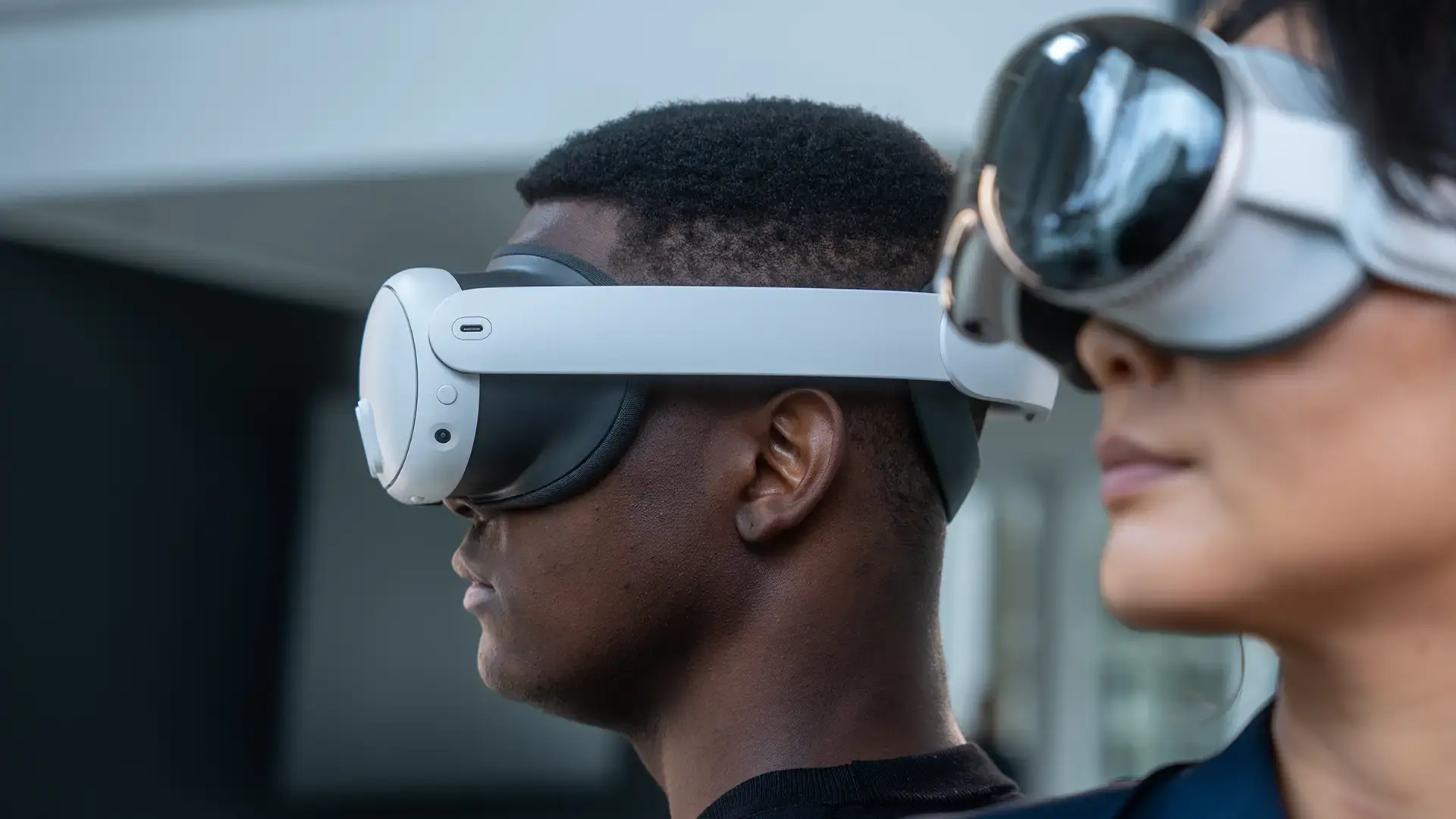
Current headsets supported include the Apple Vision Pro, offering advanced spatial computing and high-resolution passthrough; the Meta Quest 3, providing an accessible mixed reality experience with powerful hardware; and the PICO 4 Ultra Enterprise, a business-ready AR headset with eye tracking and enterprise security features.
Dedicated AR glasses are also re-emerging as a category — lighter, more wearable, and increasingly capable. Hololight has partnered with Snap Inc. to bring its XR pixel streaming technology to Snap Spectacles, enabling high-fidelity, interactive 3D applications on lightweight, wearable AR glasses. The integration supports low-latency streaming of complex XR applications, hand tracking and interaction, and audio streaming — making Spectacles a viable platform for immersive enterprise and developer use cases. Snap's next generation of consumer Specs is planned for public launch in 2026, extending this capability further. Read more about the Hololight and Snap partnership →
With Microsoft ending support for HoloLens, enterprises must reassess their XR strategies and adopt more flexible, future-proof solutions. Hololight Stream enables businesses to continue running high-fidelity XR experiences on modern devices without relying on aging hardware. Since Hololight Stream supports a wide range of current and emerging AR headsets, companies can transition to the best available hardware without disrupting their workflows.
The end of HoloLens is not the end of enterprise AR — it is a shift toward a more open, device-agnostic landscape where no single manufacturer controls the roadmap. Hololight is built for exactly that landscape.
What XR Really Means XR (Extended Reality) is an umbrella term for Virtual Reality (VR), which creates a fully digital environment, Augmented...
Augmented Reality is already delivering measurable results in product development: from faster design cycles to fewer errors and lower costs. But...