
 Laura Haase
What's New in Hololight Stream 2026.1.0.0
 Phillipp Landgraf: Oct 8, 2026
Hololight Stream version 2026.1.0.0 is available. It is a broad release, with work going into stability, connection quality and the everyday...
Autodesk VRED is where automotive design gets validated. Designers, engineers, surface specialists, and perceived quality teams use it to build and review digital prototypes at photorealistic quality, so decisions can be made on the data rather than on a physical build.
Most of those decisions are still made on a screen. A full-size vehicle viewed at desk scale loses the two things the review depends on most, which are proportion and presence.
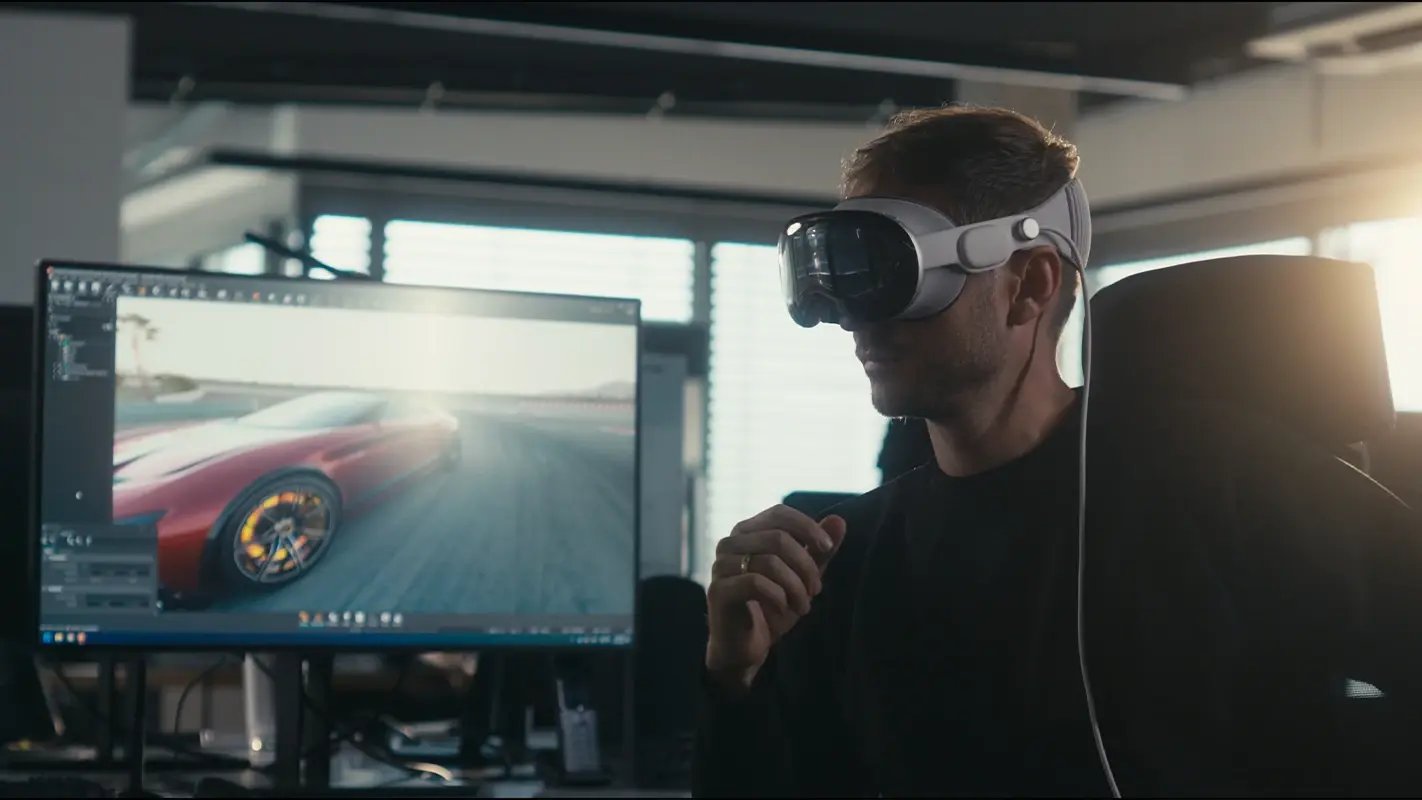
Hololight's XR pixel streaming technology takes the same VRED scene into a headset at full scale and full quality, from a single button inside the application. This article covers what that changes across an automotive review, from early proportion checks to the final client presentation.
What this article covers:
Where XR review fits in an automotive program
| Review stage | What the team is judging | Who takes part | What XR streaming adds |
|---|---|---|---|
| Concept and proportion | Stance, volume, surface language | Design team | The model is seen at full scale, not at desk scale |
| Internal alignment | Design intent against engineering constraints | Design, engineering, program leads | Everyone views the same model, at the same scale, in one session |
| Ergonomic validation | Reach, sightlines, interior package | Design, ergonomics, engineering | Seating position and sightlines are assessed at true scale before a build |
| Client presentation | Perceived quality, materials, lighting | Clients, executives, external partners | The design is reviewed at full scale and full quality, wherever the participant is |
Getting automotive CAD into a headset has traditionally meant preparing it first. Geometry gets decimated, materials get baked, and the scene gets exported into something a headset can run. Every step moves the review a little further from the data the decision is supposed to be made on.
Hololight's XR pixel streaming technology removes the preparation step. VRED renders the scene exactly as it stands, on the workstation or server it already runs on, and the headset receives the rendered pixels. There is no export, no conversion, and no simplified review build to keep in sync with the real one.
That matters most where fidelity is the point. How a highlight travels across a surface, the alignment of a panel gap, the way a material finish reads under changing light. These are the details an automotive review exists to judge, and they are the first things a simplified model loses.
What stays out of the workflow:
Because rendering happens on the workstation or server, the headset does not have to run the model. That moves the hardware requirement off the device, which changes who can realistically take part in a review.
Hololight's XR pixel streaming technology delivers the same session to all major XR devices, including HoloLens 2, Meta Quest, HTC VIVE, PICO, and Apple Vision Pro, wirelessly. A studio with mixed hardware does not need to standardize on one headset before it can run reviews.
For a participant, joining means putting on a headset and connecting. That is a meaningful difference when the review includes engineering, program leadership, or a client who is present for twenty minutes and does not work in VRED day to day.
Setup on the VRED side is deliberately small. The runtime installs on the machine already running VRED, a stream button appears inside the application, and the headset connects to the address the runtime shows. Our guide to XR streaming for Autodesk VRED covers the full walkthrough.
What XR pixel streaming means for a review session
| Factor | What it means for the review |
|---|---|
| Where rendering happens | On the workstation or server already running Autodesk VRED |
| What the headset receives | Encoded and encrypted pixels, decoded and displayed on the device |
| Device range | All major XR devices, including HoloLens 2, Meta Quest, HTC VIVE, PICO and Apple Vision Pro |
| Movement | Wireless, so a full-scale walkaround is possible |
| Joining a session | A headset and a network connection |
Automotive design data is among the most sensitive material a company holds. An unannounced vehicle program is commercially valuable long before it is public, and reviews routinely involve suppliers, agencies, and clients outside the organization.
With Hololight's XR pixel streaming technology, only the rendered pixels travel. They are encoded and encrypted before they cross the network, and the headset decodes and displays them. The model itself stays on the machine that opened it, so a review with six participants does not put the design data in six places.
Where that machine sits is a decision the customer makes. Rendering can run on a local workstation, on an on-premises server, or in the cloud, which means the deployment can be matched to whatever the security requirements already are rather than the other way around.
Where the rendering machine can sit
| Deployment | Where rendering runs | What it suits |
|---|---|---|
| Local workstation | The machine already running Autodesk VRED | Individual reviews and small design teams |
| On-premises server | Inside the company network | Shared use across a studio, with all data kept in house |
| Cloud | Hosted infrastructure | Distributed teams and programs with variable demand |
Genesis Design Studios works on automotive and industrial design programs with clients in several countries, from concept vehicles to high-end lighting components. Until recently, most of those decisions were made on a screen, in 2D, without a sense of scale, and physical prototypes filled the gap.
Streaming VRED into XR changed that. Full-complexity CAD is rendered server-side and delivered to headsets, so designs are judged at full detail and at full scale rather than in a prepared version. Clients in different countries now join the same session.
| Measure | Result |
|---|---|
| Time per design review | Reduced from roughly 40 hours to 25 |
| Physical prototypes | Reduced threefold, eliminating two builds in three |
| Cost saved per project | Between 10,000 and 50,000 dollars |
| Clients in a single review | Up to three, in different countries |
The full case study covers the workflow in more detail.
An automotive design review is a judgment about proportion, quality, and how a surface reads in real light. Those judgments are easier to make at full scale than at desk scale, which is why so many programs have moved part of the review into XR.
What makes that work in practice is keeping the model intact, letting people join on the hardware they already own, and keeping the design data where it started. Autodesk VRED supplies the fidelity, and Hololight's XR pixel streaming technology carries it into the room.
Talk to us about XR streaming for your VRED reviews
Last Updated August 13, 2026
Sources
 Phillipp Landgraf: Oct 8, 2026
Hololight Stream version 2026.1.0.0 is available. It is a broad release, with work going into stability, connection quality and the everyday...
 Phillipp Landgraf: Oct 1, 2026
Remote rendering and pixel streaming are both used to describe enterprise XR streaming infrastructure, including by vendors and in technical...
 Sandro Sailer: Sep 24, 2026
For most enterprise teams, XR device management means one thing: a way to control their headsets. Mobile device management (MDM) tools like ArborXR,...