XR Trends 2026: Where Enterprise Streaming Goes Next
XR trends 2026: spending is shifting to wearables, growth to services, and AI workloads to servers. What that means for enterprise XR deployment.
Hololight has officially launched the latest version of Hololight Stream and it comes packed with exciting features and performance enhancements to elevate your XR streaming experience. Whether you’re working on immersive virtual reality (VR), augmented reality (AR), or mixed reality (MR) applications, Hololight Stream now offers more robust support for cutting-edge hardware and software environments. Let’s explore some of the key highlights from this release.
One of the standout updates in this release is the introduction of new client support, making Hololight Stream more accessible to a broader range of devices.
Hololight Stream 2024.0.0.0 comes with extensive documentation to help developers quickly adopt the new features. Step-by-step guides for upgrading Unity projects, particularly for MRTK3 and DirectX 12 integration, are readily available. Users are encouraged to explore the new “Hololight Stream Examples” package in Unity for hands-on examples of how to implement the latest features.
Read the fill release notes right here. For more information or to get started with Hololight Stream 2024.0.0.0, visit our contact site or reach out to our support team via email at info@hololight.com.
XR trends 2026: spending is shifting to wearables, growth to services, and AI workloads to servers. What that means for enterprise XR deployment.
Smart glasses have no display, AR glasses do, and both now ship with AI. Here is what separates them and what each one can actually show you.
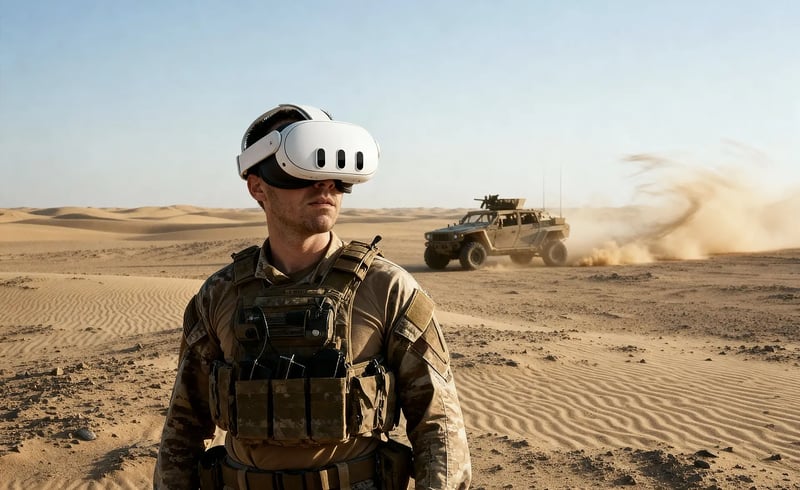
Data sovereignty in defense: the frameworks that shape it, the CLOUD Act question, and the endpoint gap most XR programs miss.